Hydrodermabrasion vs Hydrafacial: Which Treatment Is Better for Your Aesthetic Business?
Why Hydrodermabrasion vs Hydrafacial Matters for Aesthetic Professionals
In the booming $100 billion global aesthetic market (Combination research data), non-invasive facial treatments are the backbone of successful clinics, spas, and equipment retail businesses. Among the most sought-after services, hydrodermabrasion and Hydrafacial consistently top client demand lists—yet their similarities in name and core function often lead to confusion for business owners and buyers alike. For aesthetic clinics deciding which service to add, equipment wholesalers sourcing in-demand products, or retailers targeting beauty professionals, understanding the nuanced differences between hydrodermabrasion vs hydrafacial isn’t just academic—it’s a strategic imperative that directly impacts profitability, client retention, and market positioning. Recognizing the key difference between hydrodermabrasion and Hydrafacial is essential for making informed business decisions and ensuring you select the most suitable treatment for your clientele.
The debate of hydrafacial vs hydrodermabrasion extends beyond treatment techniques; it encompasses equipment investment costs, operational flexibility, target client demographics, and long-term revenue potential. While both treatments deliver exfoliation, hydration, and visible glow, their unique technologies, customization capabilities, and brand recognition create distinct value propositions for aesthetic businesses. This guide will break down every critical factor—from device mechanics to pricing strategies—to help you make an informed decision that aligns with your business goals, whether you’re expanding your service menu, stocking inventory, or advising clients on the best options.
The Booming Demand for Non-Invasive Facial Treatments: Data & Trends
Consumer preferences are shifting dramatically toward gentle, effective, and low-downtime skincare solutions— a trend backed by compelling global data. In the $100 billion global aesthetic market, non-invasive treatments accounted for 83% of all aesthetic procedures in 2023, and they are projected to grow at an annual rate of approximately 8% over the next decade. A 2024 report by the American Society for Aesthetic Plastic Surgery further confirms this momentum, noting a 28% year-over-year growth in non-invasive facial procedures, with clients prioritizing treatments that deliver immediate results without irritation and minimal downtime.
Hydrodermabrasion and Hydrafacial both fit this sweet spot, but their differing approaches cater to distinct market segments: hydrodermabrasion appeals to budget-conscious clients and those with sensitive skin, while Hydrafacial targets premium consumers seeking brand-backed, customizable results. The minimal downtime associated with both treatments is a key factor driving their demand, as clients can quickly resume normal activities after the procedure. For businesses, this sustained growth trajectory means choosing the right treatment (or combination) isn’t just a short-term decision—it’s a way to tap into a multi-billion-dollar market expansion and secure long-term revenue stability.
Core Decision Questions for Clinics & Wholesalers
-
Clinics: Will the treatment complement your existing services? What’s the initial equipment cost vs. projected revenue? Does it align with your client demographic? Evaluate which treatment fits your business model and the unique needs of your clients for optimal results.
-
Wholesalers: Which equipment has higher market demand? What’s the profit margin on devices and consumables? Does the manufacturer offer reliable support and training?
By addressing these questions, we’ll navigate the hydrodermabrasion vs hydrafacial comparison to help you turn skincare trends into sustainable business growth.
What Are Hydrodermabrasion and Hydrafacial?
Before diving into comparisons, it's critical to establish clear definitions—especially since industry terminology can be inconsistent. Both treatments fall under the category of “hydradermabrasion,” but their execution, branding, and technology set them apart.
✅Hydrodermabrasion: The Gentle, Versatile Workhorse
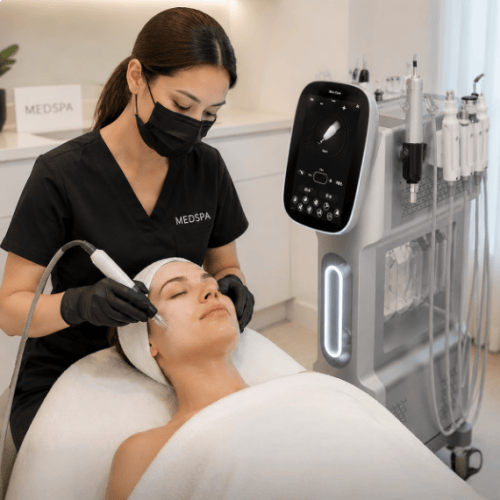
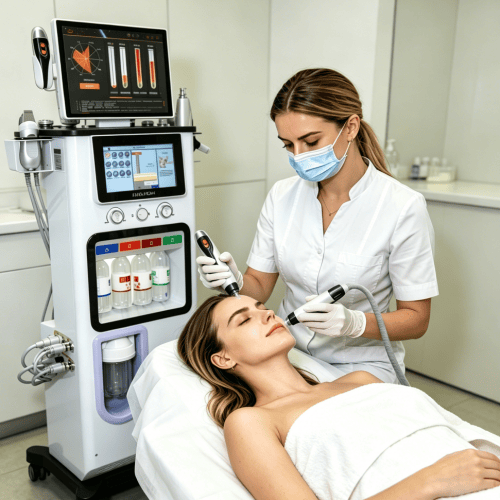
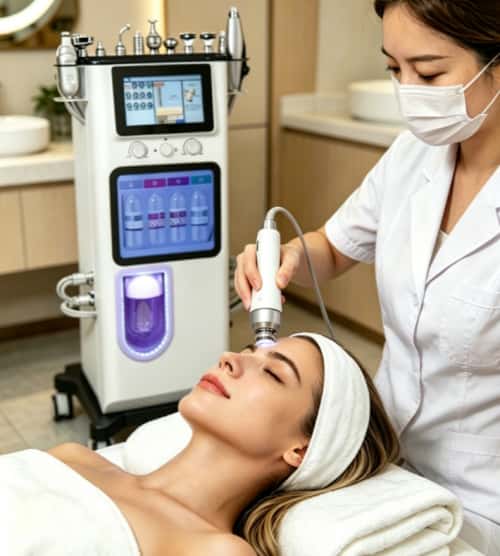
Hydrodermabrasion is a generic, non-invasive facial treatment that combines water-based exfoliation with suction to remove dead skin cells, unclog pores, and deliver hydration. Unlike traditional microdermabrasion, which uses an abrasive diamond tip to mechanically exfoliate and remove dead cells from the outer layer of the skin, a hydrodermabrasion treatment relies on a high-velocity stream of liquid—typically water, saline, or serum-infused solutions—combined with oxygen to gently lift away dead skin cells and slough off the outer layer (stratum corneum). The whole process involves exfoliation, extraction, and hydration in one session. A built-in vacuum simultaneously extracts impurities, while the liquid medium provides instant hydration to soothe the skin.
Hydrodermabrasion is often perceived as a pampering facial rather than a clinical procedure. It is known for being gentle and suitable for sensitive skin, making it particularly beneficial for individuals with rosacea, thin skin, or active breakouts due to its non-irritating nature. Hydrodermabrasion treatments can be performed as frequently as every two weeks because of their gentle approach. However, it is generally not recommended for anyone suffering with an impaired or compromised skin barrier, or severe rosacea and acne.
Key characteristics of hydrodermabrasion:
|
Crystal-free: Eliminates risk of irritation or micro-tears, making it suitable for sensitive skin. |
|---|
|
Flexible technology: Machines are not brand-specific, allowing practitioners to adjust pressure, flow rate, and serum formulations. |
|
Cost-effective: Lower initial equipment investment and consumable costs compared to Hydrafacial. |
|
Maintenance-focused: Ideal for routine skin refreshment, hydration, and gentle rejuvenation. |
For businesses, hydrodermabrasion’s versatility makes it an adaptable addition—clinics can tailor it to different skin types (from rosacea-prone to dry), while wholesalers and retailers benefit from its broad market appeal and lower price point for equipment.
✅Hydrafacial: The Patented, Brand-Driven Powerhouse
Hydrafacial (often capitalized to emphasize its branded status) is a leading name in the industry and represents the Hydrafacial brand—a patented, medical-grade treatment that builds on hydrodermabrasion principles but adds standardized, multi-step protocols and proprietary technology. The Hydrafacial treatment is a multi-step process developed by HydraFacial MD®, following a strict three-step protocol—Cleanse + Peel, Extract + Hydrate, Fuse + Protect—using a handheld device with patented vortex technology.
Key characteristics of Hydrafacial:
|
Patented technology: The vortex-fusion system creates a whirlpool effect to loosen debris, extract impurities, and infuse serums simultaneously. |
|---|
|
Standardized protocols: Consistent results across all certified providers, building strong brand trust. |
|
Highly customizable: Hydrafacial infuses the skin with tailored serums based on individual skin concerns after exfoliation. Treatments can be customized with specific serums to target individual skin concerns effectively, and Hydrafacial offers specific boosters for tailored concerns like aging or pigmentation. |
|
Superior extraction: Hydrafacial is renowned for superior, deep, and relatively pain-free pore extraction. |
|
Intense cleansing: Hydrafacial is designed to be a more intense treatment compared to hydrodermabrasion, utilizing suction and vortex action for deeper cleansing. |
|
Prestige positioning: Recognized as a premium treatment, commanding higher client prices and brand loyalty. |
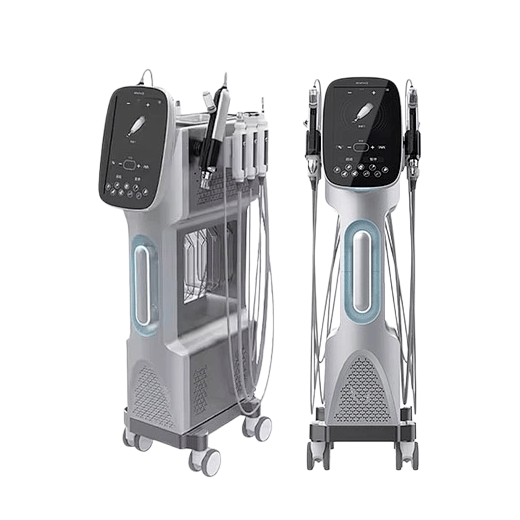
Hydrafacial offers a range of treatment options and benefits, making it a popular choice for both clients and professionals. Hydrafacial’s brand recognition is a major business asset—consumers often seek it out by name, driving organic demand for clinics that offer it. For wholesalers and retailers, partnering with trusted manufacturers like Jingyue Beauty professional Hydrafacial machines are engineered to meet the high standards of aesthetic businesses—provides a competitive edge. Jingyue Beauty’s Hydrafacial equipment combines the core patented vortex-fusion technology with user-friendly design, making it a reliable choice for clinics seeking consistent results and wholesalers looking to stock in-demand, high-quality devices.
What are the Core Differences: Hydrodermabrasion vs Hydrafacial
The technical difference between hydrodermabrasion vs hydrafacial is where their business value propositions begin to diverge. Understanding the difference is crucial for clinics, as it impacts treatment time, staff training, and client experience; for equipment suppliers, it influences manufacturing costs, market positioning, and competitive advantage.
|
Core Dimensions of Technology |
✅Hydrodermabrasion |
✅Hydrafacial |
|---|---|---|
|
1)Exfoliation Technology Principle |
Adopts supersonic liquid jet technology, using water, saline, or serum solutions as media to gently peel off the stratum corneum. Both treatments work on the skin's surface to remove dead skin cells and impurities. |
Employs patented Vortex-Fusion technology + spiral tip, creating negative pressure through vortex effect to precisely peel and loosen deep-seated impurities from the skin's surface. |
|
2)Impurity Extraction Mechanism |
Built-in standard vacuum suction device, synchronously removing exfoliated dead skin cells and surface impurities; extraction intensity is manually adjustable. |
Spiral tip combined with negative pressure vortex design, directionally extracting blackheads and oil plugs from pores without damaging the skin barrier. |
|
3)Serum Infusion Method |
Serum application is separate from exfoliation/extraction: cleansing and exfoliation are completed first, then serum is applied separately, resulting in limited skin absorption efficiency. |
Serum infusion is synchronously integrated with extraction: the vortex effect opens pores while directly delivering serum, maximizing the penetration of active ingredients; supports on-the-spot customized formulas. |
|
4)Equipment System Architecture |
Open system with no brand binding, compatible with third-party handpieces, serums, and consumables; flexible expansion of functional modules is possible. |
Patented closed-loop system: the original version is only compatible with HydraFacial MD® dedicated consumables; |
|
5)Operational Parameter Regulation |
Parameters such as pressure, liquid flow rate, and suction intensity are freely adjustable, relying on the technician’s experience to adapt to different skin conditions. |
Core parameters (e.g., negative pressure intensity, serum flow rate) are standardized and preset with limited fine-tuning options; Jingyue Beauty models add intelligent touchscreens and pre-programmed treatment modes. |
|
6)Core Component Characteristics |
No patented exclusive components; handpieces are mostly universal, durable, and easy to maintain (only regular cleaning and calibration required). |
Core component is a patented disposable spiral tip, avoiding cross-infection. |
|
7)Technology Integration Capability |
Basic function integration (exfoliation + suction + basic hydration); some models can be expanded with simple modules such as ultrasound and cold therapy. |
Deep integration of multiple technologies (cleansing + exfoliation + extraction + infusion + protection); Trusted suppliers, like Jingyue Beauty models additionally support expanded functions such as AI skin analysis and LED light therapy. |
|
8)Precision of Skin Adaptation Regulation |
Wide adjustment range but basic precision, mainly rough-tuning intensity through pressure and liquid flow rate. |
Specialized boosters and corresponding technical parameters designed for different skin concerns (e.g., acne, fine lines, pigmentation), enabling more precise and targeted regulation. |
Both hydrodermabrasion and hydrafacial treatments cleanse and exfoliate the skin's surface, helping to remove impurities and dead skin cells. As a result, clients often notice a smoother texture and improved overall complexion after either procedure.
4. Business Impact: Investment, Costs, and Profitability Analysis
For aesthetic businesses, the hydrodermabrasion vs hydrafacial decision ultimately boils down to ROI. Clients report high satisfaction and visible improvements after both treatments, which supports repeat business and positive word-of-mouth. Below is a detailed breakdown of cost levels, pricing positioning, and revenue potential to help you evaluate which treatment aligns with your financial goals.
Initial Equipment Investment
|
Treatment |
Equipment Cost Level |
Licensing Requirements |
Additional Costs |
|
Hydrodermabrasion |
Low to moderate |
None (generic technology) |
Handpieces, serum compatibility testing (low cost) |
|
Hydrafacial |
High (Original Brand) |
None for compatible professional models |
Staff training, consumable tips/serums (moderate cost) |
Hydrodermabrasion's lower initial investment makes it accessible to small clinics and startups, while Hydrafacial's higher cost—mitigated by Jingyue Beauty’s competitive pricing for professional-grade machines—positions it as a premium offering for established businesses targeting high-end clients. For wholesalers, like Jingyue Beauty's Hydrafacial equipment delivers a stronger profit margin than original brand devices, as it avoids steep licensing fees while maintaining core functionality. Retailers can market these machines as “cost-effective premium alternatives,” appealing to clinics that want to offer Hydrafacial-style treatments without the original brand’s price tag.
Operational Costs: Consumables & Maintenance
-
Hydrodermabrasion: Consumable costs are minimal—serums are low-cost, and handpieces have a long service life with regular use. Maintenance is simple, with most machines requiring only regular cleaning and periodic calibration (low maintenance cost).
-
Hydrafacial: Consumables are more expensive than hydrodermabrasion—disposable spiral tips and proprietary serums/boosters are moderately priced. Jingyue Beauty reduces long-term costs by offering durable, easy-to-maintain machines with a long warranty period and affordable replacement parts. Maintenance requires authorized service technicians, with costs for Jingyue Beauty models lower than original brand maintenance fees. The higher consumable costs are offset by the treatment’s higher pricing positioning.
Pricing Strategies & Client Retention Potential
Client pricing varies by market, but here’s a typical positioning for both treatments:
-
Hydrodermabrasion: Mid-range pricing. Most clinics offer packages to encourage repeat bookings. Since it’s gentle, clients can book sessions frequently, creating consistent recurring revenue. Both hydrodermabrasion and Hydrafacial help clients achieve a brighter complexion, which is a key factor in client satisfaction and retention.
-
Hydrafacial: Premium pricing, with additional charges for specialized boosters. Clinics using Jingyue Beauty’s Hydrafacial machines can price treatments slightly lower than those using the original brand, attracting price-sensitive premium clients while maintaining healthy profit margins. Clients typically book regular monthly sessions, with a high proportion of Hydrafacial clients returning for follow-up treatments in the short term
For clinics, Hydrafacial delivers higher per-session revenue, while hydrodermabrasion offers higher booking frequency. Wholesalers and retailers can capitalize on these differences: hydrodermabrasion is ideal for volume sales to budget-conscious clinics, while Jingyue Beauty’s Hydrafacial machines appeal to premium buyers seeking balance between quality and cost.
For aesthetic businesses, the hydrodermabrasion vs hydrafacial decision ultimately boils down to ROI—but profitability is just one piece of the puzzle. Operational efficiency, cost control, and risk mitigation are equally critical to long-term success, as they directly impact how much of your revenue translates to bottom-line profit.
Client Targeting: Which Treatment Attracts Your Target Demographic?
Understanding your target client base is critical to choosing between hydrodermabrasion vs hydrafacial. Both treatments support healthy skin and can be positioned as part of an anti ageing strategy, helping clients reduce the appearance of fine lines and wrinkles while promoting long-term radiance. Below’s how each treatment resonates with different consumer segments—and how businesses can leverage these insights to drive sales by offering the high-quality care your skin deserves.
✅Ideal Client Profiles for Hydrodermabrasion
Hydrodermabrasion’s gentle, cost-effective nature appeals to:
|
Budget-conscious consumers: Those seeking effective skincare without premium pricing. |
|---|
|
Sensitive skin sufferers: Clients with rosacea, thin skin, or active breakouts who need non-irritating treatments. |
|
Maintenance-focused clients: Individuals looking for routine refreshment between more intensive procedures (e.g., lasers, chemical peels). |
|
First-time aesthetic clients: Those new to professional skincare who want a low-risk, relaxing experience. |
|
Clients concerned about wrinkles and fine lines: People seeking anti-aging benefits, as hydrodermabrasion can help reduce the appearance of wrinkles and promote a more youthful look. |
For clinics targeting these groups, hydrodermabrasion is a gateway service—once clients experience its benefits, they’re more likely to book additional treatments. Wholesalers can market hydrodermabrasion machines as “entry-level profit drivers” for clinics looking to expand their client base.
✅ Ideal Client Profiles for Hydrafacial
Hydrafacial's premium positioning and targeted results attract:
|
|
|
|
Hydrafacial's ability to deliver “event-ready” skin makes it a top choice for clinics in urban areas or near wedding venues. For retailers, highlighting Hydrafacial's celebrity endorsements and social media presence can drive demand among beauty professionals looking to tap into trending treatments.
Sourcing & Retailing Guide for Clinics, Wholesalers/Retailers
For equipment wholesalers and retailers, the hydrodermabrasion vs hydrafacial comparison extends beyond product features to sourcing, marketing, and customer support. Here's how to maximize success with each treatment:
✅ Key Factors to Evaluate When Sourcing Equipment
-
Hydrodermabrasion:
-
Look for machines with adjustable pressure/flow rates and compatibility with multiple serum brands (increases clinic flexibility).
-
Prioritize CE, RoHS certification to ensure safety and compliance.
-
Choose manufacturers that offer 12-24 month warranties and global after-sales support (critical for international wholesalers).
-
-
Hydrafacial:
-
Only source from authorized HydraFacial MD® distributors to avoid counterfeit products.
-
Verify that the manufacturer provides training materials and technical support for clinic staff.
-
Consider bundling devices with starter kits (serums, tips, boosters) to increase order value.
-
✅ Marketing Hydrodermabrasion vs Hydrafacial to Clinics
-
Hydrodermabrasion: Highlight low initial investment, flexible customization, and broad client appeal. Use messaging like “Grow your client base with a treatment that works for every skin type—no licensing fees required.”
-
Hydrafacial: Emphasize brand recognition, client demand, and high revenue potential. Messaging like “Attract premium clients with the requested facial treatment—backed by clinical results and brand loyalty” resonates with clinics looking to elevate their offerings.
✅ Training & After-Sales Support to Enhance Competitiveness
Both treatments require staff training to ensure safe, effective delivery—but the depth of training varies:
-
Hydrodermabrasion: Basic training (1-2 hours) covers device operation and serum selection. Wholesalers can offer free online training modules to add value.
-
Hydrafacial: Certified training (4-8 hours) is required to use the device and access proprietary products. Retailers should partner with HydraFacial MD® to provide official training for clinic staff.
Offering ongoing support—such as troubleshooting guides, marketing materials, and serum recommendations—can differentiate wholesalers and retailers in a competitive market.
Treatment Frequency and Results: Setting Client Expectations and Maximizing Outcomes
When introducing Hydrodermabrasion and Hydrafacial treatments to your service menu, it’s essential to educate clients about how often they should schedule sessions and what results they can realistically expect. Both treatments offer a non-invasive way to enhance overall skin health, utilizing gentle exfoliation to remove dead skin cells and promote skin renewal.
For Hydrodermabrasion, skincare professionals typically recommend treatments every 2-4 weeks. This frequency allows the skin to recover while maximizing the cumulative benefits of regular exfoliation and hydration. Clients often notice improvements in skin tone, texture, and clarity after just a single session, but the most dramatic results—such as reduced fine lines and a brighter, smoother complexion—are achieved with consistent appointments over time.
Hydrafacial, with its advanced multi-step process, is generally performed every 4-6 weeks. This schedule supports ongoing skin hydration and renewal, helping to maintain a radiant, healthy appearance. The treatment’s ability to deeply cleanse and infuse the skin with active ingredients means clients can expect visible improvements in skin clarity, hydration, and overall texture after each visit.
It’s important to remember that individual results will vary based on skin type, specific concerns, and adherence to recommended home care routines. By setting clear expectations and customizing treatment plans, skincare professionals can help clients achieve optimal outcomes—whether they’re seeking a quick refresh before a big event or long-term improvements in skin health. Ultimately, both Hydrodermabrasion and Hydrafacial provide a gentle, effective, and non-invasive path to healthier, more vibrant skin.
Customization and Flexibility: Tailoring Treatments for Diverse Client Needs
One of the standout advantages of both Hydrodermabrasion and Hydrafacial is their ability to be customized for a wide variety of skin types and concerns. This flexibility is a game-changer for skincare professionals aiming to deliver truly personalized results.
Hydrodermabrasion offers adjustable suction levels and the option to select different serums, allowing practitioners to fine-tune the treatment for sensitive skin, acne-prone complexions, or those seeking gentle exfoliation. Whether a client needs a mild refresh or a deeper clean to address clogged pores and dullness, the process can be adapted to suit their unique needs. This makes hydrodermabrasion a great treatment for clients with conditions like hyperpigmentation, fine lines, or those simply looking to maintain a radiant, healthy glow.
Hydrafacial takes customization a step further with its patented system, offering a range of targeted serums and boosters designed to address specific concerns such as acne, aging, or uneven skin tone. Skincare professionals can select from a menu of active ingredients to create a tailored treatment plan, ensuring each session delivers maximum benefits for the client’s individual goals. The ability to combine gentle exfoliation, deep cleansing, and potent serums in one treatment means Hydrafacial can be adapted for everything from sensitive skin to more resilient types seeking advanced anti-aging results.
By leveraging the customization and flexibility of hydrodermabrasion and Hydrafacial, clinics can confidently treat a diverse clientele, delivering visible improvements in skin renewal, hydration, and overall radiance. This personalized approach not only enhances client satisfaction but also positions your business as a leader in advanced, results-driven skincare.
Conclusion: Making the Right Choice for Your Aesthetic Business
The hydrodermabrasion vs hydrafacial debate doesn’t have a one-size-fits-all answer—your choice depends on your business goals, target market, and budget. Here’s a final breakdown to guide your decision:
Choose Hydrodermabrasion If:
-
You’re a new clinic or operating on a tight budget.
-
You want to cater to sensitive skin clients and budget-conscious consumers.
-
You value operational flexibility (e.g., using third-party serums, adjusting treatment intensity).
-
You’re a wholesaler/retailer targeting volume sales to small clinics or startups.
Choose Hydrafacial If:
-
You’re an established clinic targeting premium clients and high revenue per session.
-
You want to leverage brand recognition and organic client demand without the original brand’s price tag.
-
You’re willing to invest in a certified, reliable machine with strong after-service support.
-
You’re a wholesaler/retailer partnering with premium aesthetic brands and targeting high-end clinics—Jingyue Beauty’s competitive pricing, medical-grade quality, and marketing support will help you stand out in the hydrafacial vs hydrodermabrasion market.
For many businesses, the optimal strategy is to offer both: use hydrodermabrasion to attract new clients and build loyalty, then upsell them to Jingyue Beauty’s Hydrafacial for targeted results. This approach maximizes client retention, increases average revenue per visit, and positions your business as a full-service aesthetic provider.
Ultimately, both hydrodermabrasion and Hydrafacial are proven revenue drivers in the non-invasive skincare market. By understanding their technical differences, business impacts, client appeal, and trend alignment—plus leveraging high-quality equipment like Jingyue Beauty’s professional Hydrafacial machines—you can make a decision that fuels growth, enhances your brand, and delivers value to your clients.
Ready to take the next step? Invest in high-quality equipment, train your staff to highlight each treatment’s unique benefits, and market your offerings to align with your target demographic. Contact Jingyue Beauty to customized your aesthetic business.
How Much Does a Facial Usually Cost?
What Is a Hydrodermabrasion Facial?
Related Article