Pico Laser vs Q-Switch Laser: Clinical Applications in Modern Aesthetic Practice
1. Introduction: The Evolution of Precision in Laser Aesthetics
The pursuit of flawless skin—free from unwanted tattoos, sun damage, or complex pigmentation—has been fundamentally reshaped by advances in laser technology. In aesthetic medicine, the transition from Q-Switched nanosecond lasers to Picosecond lasers represents more than a simple upgrade; it marks a paradigm shift in how we interact with and eliminate unwanted pigment at a cellular level. While the industry often asks, "Which laser is better?" the reality is far more nuanced. Effective treatment is not about choosing a universally "superior" technology, but about mastering the right tool—with its specific pulse duration, wavelength, and energy—to match the patient's unique condition, skin type, and treatment goals. This definitive guide moves beyond basic comparisons to provide a deep dive into the strategic clinical applications and optimal outcomes of both Q-Switched and Pico lasers for tattoo removal, pigmentation therapy, and skin rejuvenation, focusing specifically on the pico laser vs q switch debate that dominates modern aesthetic discussions.
2. Clinical Applications: Targeted Strategies by Condition
The true art of laser therapy lies in matching the technology and parameters to the specific condition, which is central to understanding the pico vs q switch laser decision-making process.
✅Tattoo Removal: Mastering Color with Wavelength & Pulse Width
Success hinges on selecting the right wavelength for the ink color and the right pulse width for ink density in the pico laser vs q switch laser comparison.
-
Black Tattoos: Both lasers are effective with 1064nm. Picosecond lasers often provide faster clearance with less discomfort in the pico vs q switch laser evaluation.
-
Multi-Colored Tattoos: Pico lasers are superior. Key wavelength matches include:
-
Red/Yellow Inks: 532nm (effective in both, but fewer sessions with Picosecond).
-
Green/Blue Inks: 755nm (Picosecond's 755nm wavelength is uniquely effective).
-
-
Endpoint Reaction: Aim for mild to moderate frosting (black) or subtle graying (color). Avoid excessive frosting to prevent scarring.


✅ Pigmented Lesions: A Guide to Wavelength & Endpoint Reactions
Treatment strategy is dictated by the lesion's anatomy—epidermal or dermal—in the pico laser vs q switch laser application.
-
Epidermal Lesions (Sun Spots, Freckles):
-
Wavelength: 532nm or 694nm.
-
Endpoint: Mild frosting followed by micro-crusting that sloughs off in 3–5 days.
-
-
Dermal Lesions (Nevus of Ota, Hori's Nevus):
-
Wavelength: 1064nm or 755nm for deeper penetration.
-
Endpoint: Subtle graying, mild swelling, or pinpoint purpura. Avoid intense frosting to prevent dermal scarring.
-
✅ The Critical Case of Inflammatory Pigmentation (Melasma & PIH)
Melasma is a chronic condition; lasers are for "de-inventory," not cure. The core treatment is topical/oral agents to stabilize melanocytes.
-
Technology & Wavelength: Q-Switched or Picosecond with 1064nm at low fluence in the pico vs q switch laser approach.
-
Endpoint Reaction:
-
GOOD: Subtle redness or darkening.
-
BAD: Any frosting, peeling, or purpura. These will trigger inflammation and worsen the condition.
-


✅ Acne Scars & Skin Rejuvenation
Pico lasers have a distinct advantage here through LIOB, highlighting one key advantage in the pico laser vs q switch laser comparison.
-
Technology Choice: Pico laser with a 1064nm FLA handpiece.
-
Endpoint Reaction: Mild erythema and edema (resolves in 24–48 hours). No frosting.
3. The Power of Combination Therapy: A Case Study
Modern clinics are moving beyond an "either/or" choice in the pico vs q switch laser debate, strategically using both Q-Switched and Picosecond lasers on the same patient for optimal results.

✅ Case Study: Resistant Multi-Colored Tattoo on Fitzpatrick Skin Type IV
-
Challenge: Professional tattoo with dense black outlines, green foliage, and red accents.
-
Strategy:
-
Sessions 1-2 (Picosecond): Used 755nm for green and 532nm for red. The photomechanical effect fragmented resistant colors with minimal PIH risk.
-
Sessions 3-4 (Combination): Used Picosecond 1064nm to finely fragment black ink, followed by Q-Switched 1064nm for controlled thermal ablation of dense black outlines. This synergistic approach tackled deep ink effectively.
-
Sessions 5-8 (Targeted): Used lower fluences of both lasers for residual pigment.
-
-
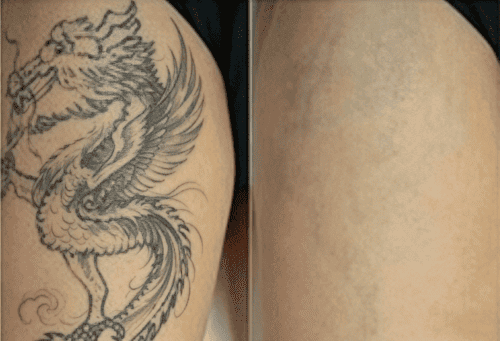
Outcome: 95% clearance in 8 sessions with no PIH or scarring, demonstrating the power of combining both technologies in the pico laser vs q switch laser approach.
4. Practitioner’s Decision Framework: From Assessment to Parameter Tuning
Effective treatment requires a systematic approach in the pico vs q switch laser decision process: Assess → Select → Adjust → Monitor.
✅ The Four Determinants of Laser Fluence
A practitioner must adjust energy based on these four pillars in the pico laser vs q switch laser application:
-
Laser Wavelength: Longer wavelengths (1064nm) require higher fluence than shorter ones (532nm).
-
Pulse Width: For the same effect, Picos lasers require 30-50% lower fluence than Q-Switched lasers. Too much fluence with a Picosecond causes LIOB and damage.
-
Lesion Color/Density: Darker, denser lesions absorb more energy—reduce fluence by 10-20% to avoid overtreatment.
-
Desired Endpoint: Aggressive (frosting) = higher fluence. Conservative (redness) = lower fluence.
✅ Quick Reference: Parameter Sheet
| Condition | Laser Type | Wavelength | Fluence (J/cm²) | Endpoint Reaction |
|---|---|---|---|---|
| Amateur Black Tattoo | Q-Switched | 1064nm | 3.0–4.0 | Mild Frosting |
| Amateur Black Tattoo | Picosecond | 1064nm | 2.0–3.0 | Subtle Graying |
| Multi-Colored Tattoo | Picosecond | 755nm | 1.5–2.5 | Mild Swelling |
| Solar Lentigo | Q-Switched | 532nm | 1.5–2.0 | Mild Frosting |
| Nevus of Ota | Picosecond | 1064nm | 2.5–3.5 | Graying + Purpura |
| Melasma | Either | 1064nm | 0.5–1.5 | Subtle Redness Only |
| Acne Scars | Picosecond | 1064nm (FLA) | 1.5–2.5 | Mild Erythema |
5. pico laser vs q switch laser Post-Treatment Protocol: Minimizing Risk & Maximizing Results
5.1 Immediate Care (0–24 Hours) |
5.2 Short-Term Care (1–7 Days) |
5.3 Long-Term Care (1–3 Months) |
|
|
|
6. Equipment Selection Guide: Small-to-Medium Clinics vs Large Aesthetic Centers
Investing in laser technology is a major decision in the pico laser vs q switch laser consideration. The right choice depends on patient volume, service portfolio, budget, and skin type demographics.
✅ Small-to-Medium Clinics (1–2 Practitioners, <50 Treatments/Month) |
✅ Large Aesthetic Centers (3+ Practitioners, >50 Treatments/Month) |
|
|
7. The Fundamental Divide: Pulse Duration & Mechanism of Action
The above section has introduced the specific practical applications of pico laser vs Q-switched laser. However, what are the specific technical differences between them in their applications? Let's also briefly introduce this next.
Pulse duration is the "genetic code" that dictates how a laser interacts with its target in the pico laser vs q switch laser comparison. The shift from nanoseconds to picoseconds changes the core mechanism from "heating to break" to "shocking to fragment."
✅ Q-Switched (Nanosecond) Lasers: The Photothermal Gold Standard
For decades, Q-Switched lasers have been the cornerstone of pigment and tattoo removal in the pico vs q switch laser history. Operating with pulse widths typically between 5–100 nanoseconds, they work by storing energy and releasing it in a single, powerful burst.
-
Mechanism: This rapid energy delivery creates an intense photothermal effect. The target chromophore absorbs the light, heats to thousands of degrees in microseconds, and undergoes thermoelastic destruction, shattering into smaller fragments (typically 10–15 µm). The body's immune system then clears these fragments over weeks. While effective, this process generates significant residual heat, contributing to a "hot, painful" sensation and a higher risk of thermal damage to surrounding tissue.
✅ Picosecond Lasers: The Photomechanical Revolution
Picosecond lasers were engineered to overcome the limitations of thermal diffusion in the pico laser vs q switch laser evolution. With pulse widths of 450–750 picoseconds, they are a thousand times faster, fundamentally altering the laser-pigment interaction.
-
Mechanism: The formula is simple: Power = Energy / Time. By drastically reducing the time (pulse width) while maintaining energy, Picos lasers achieve exponentially higher peak power. This generates a dominant photomechanical effect. Imagine the difference between warming an ice cube until it cracks (Q-Switched) versus striking it with an ultra-fast hammer (Pico laser). The shockwave mechanically "explodes" pigment into dust-like particles (1–2 µm). This process minimizes thermal damage, leading to less patient discomfort, shorter recovery, and faster clearance as the body's lymphatic system removes the finer particles more efficiently.
8. Technological Showdown: Photothermal vs. Photomechanical
The shift from a primarily photothermal to a photomechanical mechanism is the source of the key clinical differences in the pico vs q switch laser comparison.
✅ Mechanism Comparison Table
| Parameter | Q-Switched Laser | Pico Laser |
|---|---|---|
| Pulse Duration | 5–100 ns | 450–750 ps |
| Core Mechanism | Photothermal (heat-induced fragmentation) | Photomechanical (shockwave-induced fragmentation) |
| Peak Power | Moderate (kW range) | Extreme (MW range) |
| Pigment Fragment Size | 10–15 µm | 1–2 µm |
| Residual Heat | Significant | Minimal |
| Immediate Skin Response | Pronounced frosting, swelling | Mild frosting/swelling, subtle graying |
✅ Core Advantages Comparison
1) Pico Laser Advantages in the Pico vs Q Switch Laser Debate:
-
Superior Fragmentation of Resistant Pigments: The photomechanical shockwave excels at breaking down modern, complex tattoo inks, especially blues and greens, which are notoriously difficult for Q-Switched lasers.
-
Reduced Thermal Damage & Discomfort: Ultrafast pulses minimize heat transfer, reducing pain and lowering the risk of blistering, PIH, and hypopigmentation. This enhances safety for skin types III–VI.
-
Fewer Treatment Sessions: Clinical data shows Picos lasers can reduce tattoo removal sessions by 30–50% due to more efficient particle clearance.
-
Expanded Rejuvenation Applications: With focused lens arrays (FLA), they create LIOB in the dermis, stimulating new collagen to treat acne scars and wrinkles—a capability beyond standard Q-Switched lasers.
2) Q-Switched Laser Advantages in the Pico Laser vs Q Switch Comparison:
-
Proven Efficacy & Cost-Effectiveness: For common issues like amateur black tattoos and sun spots, Q-Switched lasers deliver excellent results at a lower cost.
-
Predictable Endpoint Reactions: The pronounced "frosting" provides a clear, immediate visual cue for effective treatment of superficial lesions.
-
Controlled Ablation for Dense Pigment: The photothermal effect can be more effective at breaking up very deep, dense tattoo ink or thick epidermal lesions.
-
Long Safety Track Record: Decades of use have established Q-Switched lasers as a reliable, low-risk option.
9. Conclusion: Mastery Over Technology, Not Just Adoption
The debate between Picosecond and Q-Switched lasers is not about crowning a single winner in the pico vs q switch laser discussion. It is about recognizing that each is a powerful tool, and clinical mastery lies in knowing when and how to use each one—or both in combination—to achieve the patient's goals. The Picosecond laser, with its ultrafast pulse and potent photomechanical effect, offers superior speed, comfort, and versatility for complex tattoos, scar revision, and darker skin. The Q-Switched laser remains an indispensable, cost-effective workhorse for a wide range of common pigmented lesions.
For clinics, the decision in the pico laser vs q switch laser consideration is strategic: align your equipment with your patient demographics and business goals. For practitioners, success is defined by the integration of deep technical knowledge with impeccable clinical judgment. Ultimately, the most advanced laser is only as effective as the expertise of the practitioner who wields it. In aesthetic medicine, the ultimate precision is not just in the laser's pulse, but in the practitioner's ability to master technology in service of the patient's unique needs. Talk to Us Today
What is Q Switch Laser Treatment
What is a Q-Switched Laser?
Related Article