What Is the Laser Tattoo Removal Recovery Time? A Complete Week-by-Week Guide
Introduction
As part of the research on laser tattoo removal procedures, the first question you are likely to ask yourself is: what is the recovery time of laser tattoo removal? Surely, you've heard a lot of contradictory statements, from 'you will be able to return to your daily activities on the very next day' up to 'it will take months'. The thing is that thanks to laser technology advancements, today you can forget about all those long recovery periods you might hear before.
Here in this article, we are going to discuss the whole laser tattoo removal recovery period, from the moment you leave the clinic right up until weeks later. We will consider proper laser tattoo removal care tips, expected effects on your body and skin after the treatment, as well as ways to speed up the tattoo removal process. Both clinic staff and clients can benefit from this information to achieve excellent recovery results.
Let us start from discussing what happens to your skin at laser sessions.
How Does the Process Impact Your Skin?
When learning about the laser tattoo removal recovery time, it is useful to comprehend what happens during the procedure. As a reminder, when getting a tattoo, ink is introduced into the lower layers of the skin. As soon as this happens, the immune system starts working to remove this foreign substance from the body. However, ink particles are too large (100-200 nanometers) for phagocytes to digest them completely.

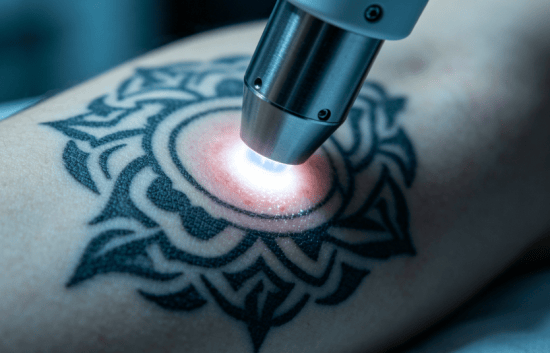
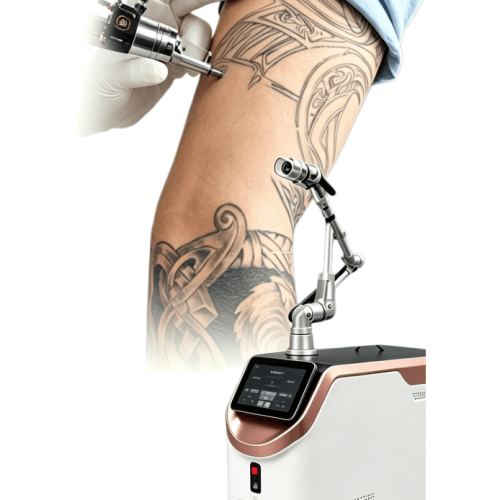
A specific type of laser beam is used during the tattoo removal session. The beam consists of short but strong bursts of light energy that is absorbed by the ink particles. As soon as that happens, these particles break apart. For instance, the Picosecond laser produces gentle vibrations with a photoacoustic effect. The beam is delivered in one trillionth of a second bursts of light.
Now that the particles are broken apart, the body takes care of the rest. It becomes possible for white blood cells to digest the particles which are then transported by lymph and excreted by the body mostly via digestion. Some parts leave the body through sweat or urine. Since all of this is needed to get rid of the ink, it is understandable why knowledge about laser tattoo removal recovery time is so necessary.
Key point: The laser just breaks the ink. Your body gets rid of the particles.
Complete Laser Tattoo Removal Recovery Timeline
The tattoo removal healing process timeline can be divided into several distinct phases. Although everyone is different and based on the size of the tattoo, colors of inks used, type of skin along and aftercare followed this timeline reflects what majority of the patients undergo.
✅Immediately After Treatment (First Few Hours)
After the treatment, the area treated will usually be red and swollen and feel warm. You might even see a phenomenon called “frosting” — a whitish, chalky layer that forms as carbon dioxide bubbles rise to the skin's surface when the laser meets the ink. This whitening or “frosting” usually fades away a few minutes later.
Some patients say it feels like a mild sunburn. These are natural responses to the procedure. Your body is reacting to the laser's activity and starting the tattoo removal healing process.
What you need to do: Compress skin with cold water using cold compress wrapped in a clean cloth for 10-15 minutes to help alleviate swelling and discomfort. Do not apply ice directly to skin.
✅Days 1–3: The Initial Healing Phase
You may even see an increase in redness and swelling during the early 24 to 72 hours of laser tattoo removal aftercare. This is nothing to worry about-it just means that your body's inflammatory reaction is active and functioning properly.
Many also experience light blistering or pinpoint bleeding at this stage. Blisters can be frightening to look at, but they're part of the healing process. These fluid-filled pockets your body created serve to protect your underlying tissue while it heals. Never POP or drain blisters yourself. If blisters grow larger than a dime in size your laser technician may drain them.
1-3d Aftercare Instructions:
-
Maintain good hygiene of the site. Wash gently with mild fragrance-free soap and warm water, pat dry—don't rub.
-
Use a thin layer of petroleum jelly or antibiotic ointment prescribed by your doctor.
-
Don't bathe too hot, or go in saunas or swimming pools or exert yourself too much. Don't let heat or sweat slow your healing.
-
Avoid sunlight and tanning beds.
✅Days 4–7: Scabbing and Itching Stage
Around day four, you will likely notice that blisters have dried up and scabs or crusts have begun to form. This is an important milestone in the tattoo removal healing process. The itching that often accompanies this stage can be intense, but it is a sign that your skin is actively repairing itself.
The most critical rule: Do not pick, scratch, or rub the scabs. Picking at scabs can lead to permanent scarring, infection, or prolonged laser tattoo removal recovery time. Let the scabs fall off on their own.
How to manage itching: Keep the area moisturized with a gentle, fragrancefree product. Apply cold compresses as needed. Wearing loose, breathable clothing also helps prevent friction against the healing skin.
✅Week 2: Scabs Falling Off
In the second week of your laser tattoo removal recovery period, all of the scabs and crust will have already been sloughed off by themselves, exposing pink new skin beneath them. The swelling and inflammation would have also decreased greatly or disappeared altogether.
Some people who underwent laser tattoo removal may observe that their tattoo looks darker compared to how it used to look before their treatment. This is what is known as carbon dusting, which refers to the process wherein the ink fragments are being expelled out of your skin. Rest assured that this is only temporary and that this phase will subside within a few weeks' time.
When to consult a doctor: Consult your physician if you begin to ooze pus from the treated area, if the redness continues to spread, or if you start to develop a fever or intense pain.
✅Weeks 3–4: Fading is Active now
Weeks Three through Four The superficial side effects are usually fully resolved. Your skin might also still be a bit pink or hypopigmented (lighter than your natural skin color), but this almost always normalizes with time.
Now, the real magic begins. Even if the superficial signs of healing have disappeared, your body is still hard at work. The immune system continues to push out the fragmented ink particles through the lymphatic system. Most patients begin to see substantial lightening to their tattoo after the 3-4 week mark.
Laser tattoo removal healing time is different from “how soon will you see results?” Visible fading requires patience. “The fading at week four is only the beginning.”
✅Weeks 5–8: Full Tissue Recovery
By weeks five to eight of the laser tattoo removal recovery time, the treated area should be fully healed at both surface and deeper tissue levels. The skin's texture and color should appear normal. Any remaining hypopigmentation typically resolves completely during this period.
This 6–8 week interval between sessions is not arbitrary.
-
Your skin needs time to fully recover before another laser pass prevents complications like scarring or textural changes.
-
Your immune system needs the entire interval to eliminate maximum ink. If sessions are scheduled too close together, skin fatigue can develop, and your body may not remove as much ink as it otherwise could.
Pro tip for clinics: Educating clients on the importance of this 6–8 week interval is one of the most effective ways to manage expectations and improve patient satisfaction. When clients understand why the wait is necessary, they are far more likely to comply.
Factors That Influence Your Laser Tattoo Removal Healing Time
All patients don't necessarily have the same laser tattoo removal healing process. There are various aspects that will determine whether your healing time is going to be long or short.

1. Location of Tattoo
Areas of the body where there's an increased activity of the immune system such as head and neck heal much quicker. The extremities, including arms and legs, require more time to recover and may need several more laser tattoo removal sessions.
2. Colors and Layers of Ink
Among the colors, black tattoos are easier to remove because they absorb all of the wavelengths used by laser machines. Next come red tattoos. Greens, yellows, and oranges are considered difficult because they react to just certain laser waves and require special machines for their removal.
The denser the tattoo, especially the layering one, the harder the tattoo is going to be to remove and the longer the healing process might become.
3. Skin Type (according to Fitzpatrick Scale)
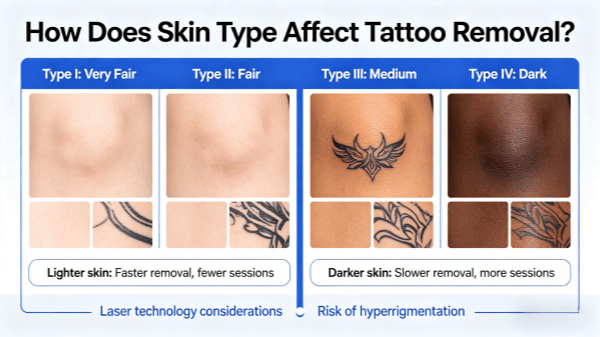
Individuals with lighter skin types (I – III) usually get healed faster from a laser procedure than the dark ones. However, darker types (IV – VI) can use the treatment safely when they choose Nd:YAG laser like the one of the PicoWay at 1064nm wavelength, especially when clinicians select the best laser for tattoo removal technologies and brands for different skin tones.
4. Condition of Your Immune System
Since the whole process of removing a tattoo depends solely on your body's ability to eliminate ink particles, the healthier the immune system is, the quicker it is going to be. Using well-calibrated devices such as Q-switched lasers for tattoo removal also supports effective outcomes with minimal downtime.
You should maintain hydration, eat healthy foods, get enough rest and stay away from tobacco, and pair these habits with appropriate Q-switch laser treatment parameters recommended by your practitioner.
5. Compliance with Laser Tattoo Removal Aftercare Instructions
Of all the possible factors influencing your healing process, this one is the most important. Neglecting aftercare tips, exposing the treated skin to sun rays, or even picking scabs is likely to increase your healing time twice or leave permanent scars.
Common Side Effects and How to Manage Them
Modern laser tattoo removal is very safe, but side effects are normal and expected. Most side effects resolve on their own within the standard laser tattoo removal recovery time of 4–6 weeks, and understanding how much laser tattoo removal costs helps patients balance expectations about both healing and budgeting.
-
Redness and Swelling (Very Common)
Nearly everyone experiences redness and swelling, which is your body's natural response to inflammation. In the vast majority of cases, the redness will be most intense within 24 hours and then begin fading. Swelling may persist for the first week. Both should be fully resolved by week two.
Treatment: Cold compresses, elevation of the area when feasible, and rest from heat. Clinics that invest in high-quality tattoo removal machines from manufacturers like JingYue Beauty can further optimize patient comfort and safety during this phase.
-
Blistering (Common)
Blisters develop when the laser heats up the ink dots in the skin. As the energy is absorbed, heat is also transferred to the surrounding fluid, resulting in blistering. Most blisters will pop within a few days, and the road will then dry out and scabe up. It's all part of the normal process of healing from tattoo removal.
Treatment: Do not interfere with blisters. If a blister breaks open on its own, carefully clean the wound and put a thin layer of antibiotic ointment on it. Never pop a blister intentionally.
-
Cabbing and Crusting (Common)
Scabbing is an indication that there's new tissue growing underneath a protective barrier. Scabs almost always come off in two weeks. Picking at scabs is the No. 1 source of scarring among patients who have laser tattoo removal.
Care: Moisturize the area and don't scratch or pick.
-
Frosting (Common)
Frosting refers to the white, powdery layer that develops on the treated tissue after a laser procedure. It results from the formation of CO₂ bubbles due to the heating of the ink and disappears after a few minutes or a few hours. No treatment is necessary.
-
Hypopigmentation (Temporary Skin Lightening)
Hypopigmentation, a temporary side effect, causes the treated skin to be lighter than the surrounding skin. This happens because the laser targets melanocytes (pigment producing cells). Concerned about hypopigmentation? It tends to clear up within 6 months, and the risk is much less with today's picosecond lasers.
Treatment: Rigorous sun protection. Never let the treated spot get direct sunlight while it's healing. When outdoors, wear SPF 50+ sunscreen and protect the area from the sun with clothing.
-
Hyperpigmentation (Temporary Skin Darkening)
Hyperpigmentation is a temporary darkening of the skin that may occur, particularly in darker skin types or if aftercare is not adhered to. Hyperpigmentation generally resolves itself over several months but can be expedited with the use of prescribed topical treatments if necessary.
Management: Best protection is avoidance of the sun. Hyperpigmentation is brought on by sun exposure.
Ways to Speed up the Process of Laser Tattoo Removal Healing
Although you cannot bypass the natural healing process, there are many ways you can accelerate it:
-
Exercise gently. Activities like light walking and stretching increase blood flow, which promotes healing. Refrain from doing strenuous exercises or heavy weight lifting until week two.
-
Stop smoking. Smoking narrows blood vessels, decreasing oxygen supply to affected body parts, which is likely to make your laser tattoo removal healing time much slower.
-
Raise larger treated parts. In case you underwent large tattoo removal procedures on a limb, raise this area slightly while sleeping within the first 48 hours.
-
Apply cold compresses frequently. Applying cold compresses frequently (for 10-15 minutes a few times a day) will help minimize swelling and pain within the first week.
-
Try topical steroids for itchiness. Should you experience unbearable itching, consult your practitioner about applying a 1% hydrocortisone cream for some days.
Managing The Recovery Time Expectations
Healing between laser tattoo removal sessions Over time you will need to wait between treatments so can has enough time to heal. Standard lazy tattoo removal package starts from Rs 3, 000 per sitting for arm sized tattoos.
Tattoo removal skin requirement healing time is not the same as “fading time we can see”. You won't be able to see noticeable fading of your tattoo until four to eight weeks after a treatment, because that's how long your body takes to clear the broken up ink, and clinics must factor this into projections when calculating laser tattoo removal machine ownership costs.
Patience is not just a virtue when it comes to laser tattoo removal—it is a medical necessity. Don't expect to speed up the process by booking your appointments closer together. Instead, you're just stressing your skin and increasing the chances of scarring and discoloration, and potentially lengthening the amount of time it takes for you to be done with laser tattoo removal.
Your first consolation from a very early consultation that the best you can do is still one of the greatest down sides of laser tattoo removal for clinic owners and practitioners. When clients know the why behind the timeline, they are more likely to stay with their treatment plan and be happy with their results, just as they are with well-planned laser hair removal machine treatments that account for skin type and technology choice.
Clinics that offer multiple services, such as tattoo removal and hair reduction, also need to select professional laser hair removal machines on the market that complement their tattoo platforms and patient base.
Conclusion
In essence, the laser tattoo removal healing period is much easier and more controllable than one might imagine. With appropriate care, most patients go through:
-
First 24–48 hours: Inflammation, swelling, sometimes blisters
-
Days 4–14: Formation of scabs and itching
-
Weeks 2–4: Falling off of scabs and the appearance of pinkish skin
-
Weeks 4–6: Healing and beginning of fading
-
Weeks 6–8: Total recovery and preparation for another session
Despite the need to be patient and adhere to the recommendations provided, laser tattoo removal healing is usually uncomplicated if a patient does everything right.
Those who are about to have this procedure done should realize that their attitude towards recovery will greatly affect the outcome. By carefully following instructions given by their practitioner, patients will achieve excellent results without any problems.
In a nutshell, patients who are going to undergo this procedure should understand that only time is essential. All they should do is keep the treated site clean and avoid excessive sun exposure.
For tattoo removal practitioners: Patient education in terms of laser tattoo removal recovery time and provision of detailed aftercare instructions are important steps to ensuring trust, reducing anxiety, and setting the stage for success.
Best Picosecond Laser Tattoo Removal Machine Reviews for Professional Use
How Does Skin Type Affect Tattoo Removal?
Related Article