HydraFacial vs Microdermabrasion: Choosing the Right Treatment for Your Business
Introduction of The Treatment Between Microdermabrasion and HydraFacial
For salon owners, medical spa directors, and aesthetic device providers, the strategic question is not merely "hydrafacial or microdermabrasion for my skin?" but rather, "Which technology investment will best serve my clientele, enhance my service menu, and deliver the strongest return on investment (ROI)?" This professional guide moves beyond basic consumer comparisons of hydraFacial vs microdermabrasion to deliver a granular analysis of these modalities as business assets. We will dissect the core mechanisms, operational workflows, ideal client targeting, and financial implications to empower your capital investment and strategic planning decisions for microdermabrasion vs hydrafacial technologies.
Core Technology and Serum Infusion of Microdermabrasion and HydraFacial
The decisive factor in the microdermabrasion vs hydrafacial debate for businesses lies in their foundational technology, which dictates treatment outcomes, consumable costs, and client positioning. Understanding the core difference between microdermabrasion and HydraFacial is the first step in making an informed choice.
|
Feature |
Microdermabrasion |
HydraFacial |
|---|---|---|
|
Core Mechanism |
Mechanical Exfoliation |
Vortex-Fusion Technology |
|
Process Description |
Microdermabrasion is a physical exfoliation method that uses a special device with tiny crystals or a diamond-tipped wand to abrade the skin's surface and remove dead cells. The vacuum suction then eliminates loosened debris from the skin. |
HydraFacial uses suction technology, glycolic acid, and salicylic acid to cleanse and exfoliate the skin. Its vacuum component pulls away loosened dead cells from the skin's surface while extracting debris from pores and simultaneously infusing hydrating serums. |
|
Nature of Action |
Dry & Subtractive: Removes the outer layer of dead skin cells through physical skin resurfacing. |
Wet & Additive: Cleanses while delivering hydration and active ingredients, providing a gentler skin resurfacing effect. |
|
Primary Effect |
Physical skin resurfacing; stimulates cell turnover through controlled abrasion of the skin's surface. |
Deep cleansing, hydration, and targeted infusion of therapeutic serums with simultaneous exfoliation and extraction. |
|
Key Technology |
Crystal-tipped or diamond-tipped device for physical exfoliation + vacuum suction. |
Patented vortex suction + serum infusion technology using glycolic and salicylic acids. |
|
Typical Consumables |
Sterilized/reusable or single-use diamond tips, filters. |
Proprietary single-use tips and specialized serum “Boosters”. |
|
Business Implication |
Lower consumable cost per treatment; simpler device mechanics. |
Higher consumable cost but enables premium service and recurring revenue from serums. |
Both microdermabrasion and HydraFacial can improve the overall appearance and health of the skin, but they achieve results through different methods, which is why a detailed equipment comparison for salons and med spas is essential when planning your service menu.
Microdermabrasion vs HydraFacial Treatment Experience
From an operational standpoint, the microdermabrasion facial vs hydrafacial procedures differ significantly. The table below provides a clear, at-a-glance comparison of the key operational differences that impact your business workflow, staff training, and client experience when deciding between microdermabrasion or hydrafacial.
|
Operational Aspect |
Microdermabrasion |
HydraFacial |
|---|---|---|
|
Average Treatment Time |
A treatment session typically lasts about 30 minutes. |
A treatment session typically lasts 45 - 60 minutes. |
|
Core Protocol Steps |
1. Cleanse 2. Mechanical Exfoliation & Suction 3. Apply Soothing Serum/SPF |
1. Cleanse & Peel (Chemical Exfoliation) 2. Extract & Hydrate (Vortex Suction) 3. Fuse & Protect (Serum Infusion & Shield) |
|
Level of Customization |
Moderate. Adjusted via vacuum pressure, number of passes, and diamond tip grit coarseness. |
High within a system. Customized through the selection of targeted “Booster” serums (e.g., for brightening, anti-aging, calming) infused in Step 3. |
|
Client Sensation |
Gritty, sanding sensation with strong suction. |
Cool, wet, tingling/tickling sensation with gentle suction. Often described as refreshing. |
|
Technician Dependency |
Higher. Results and consistency are closely tied to the technician’s skill, pressure applied, and technique. |
Lower. The systemized, device-driven protocol ensures highly consistent and reproducible results across different technicians. |
|
Immediate Post-Treatment Appearance |
Skin may show slight redness or appear pink or flushed with a slightly sandpapered texture for 24-48 hours. |
Skin typically exhibits an immediate, dewy “glow” and a brighter complexion with minimal to no redness. |
|
Primary Technology Action |
Subtractive & Dry: Physically removes the top layer of dead skin cells. |
Additive & Hydrating: Removes impurities while simultaneously infusing the skin with hydrating and treatment solutions. |
Microdermabrasion vs HydraFacial Target Client Profiles & Treatment Indications
Understanding which client is best suited for which technology is crucial for treatment efficacy, client satisfaction, and reduced risk of adverse events. Both HydraFacial and microdermabrasion are advanced skincare treatments designed to address a variety of specific skincare concerns, including aging skin, fine lines and wrinkles, dark spots, skin discoloration, and clogged pores. Identifying the client's specific skincare concern—such as dry skin, acne, or pigmentation—helps determine the most appropriate treatment to achieve optimal results.
Microdermabrasion: Best for Texture, Discoloration, and Non-Sensitive Skin
Microdermabrasion is more effective for smoothing rough or uneven skin texture and is particularly beneficial for fading skin discoloration and acne scars. It is also effective for improving skin texture and reducing the appearance of fine lines and sun damage over time. However, microdermabrasion can aggravate acne and is not recommended for active breakouts or sensitive skin, as it may be too aggressive. This treatment is typically recommended every 2-4 weeks depending on a person's skin type and specific skincare concerns. While clients will notice smoother skin immediately after treatment, significant improvements in texture and tone occur over multiple sessions.
HydraFacial: Best for Hydration, Sensitive, and Dry Skin
HydraFacial is a gentler treatment compared to microdermabrasion and is suitable for nearly every skin type, including sensitive and dry skin. It is especially recommended for clients with dry or dehydrated skin due to its deeply hydrating serums, which help keep the skin hydrated and improve overall skin hydration. HydraFacial promotes glowing skin, a smoother and more even skin tone, and can be used alongside skin brightening serums to address dark spots and pigmentation. It is also effective for minimizing fine lines and wrinkles and addressing aging skin. HydraFacial treatments are best done every 4-6 weeks to maintain skin health, and the true results—such as enhanced radiance and improved skin texture—are more evident after multiple sessions.
Summary: Choosing the Right Skincare Treatment
Both HydraFacial and microdermabrasion are effective skincare treatments for improving skin hydration, texture, and overall appearance, but they achieve results through different mechanisms. HydraFacial is ideal for those seeking a gentle, hydrating treatment suitable for nearly every skin type, especially for dry skin, sensitive skin, or those with aging skin and fine lines and wrinkles. Microdermabrasion is best for clients looking to address rough texture, mild skin discoloration, or acne scars, but is not suitable for sensitive or acne-prone skin with active breakouts. Selecting the right treatment depends on the client's specific skincare concern and desired outcome.
✅Ideal Clientele for Microdermabrasion
-
Skin Types: Normal, Oily, or Combination skin with good resilience. Contraindicated for active rosacea, sensitive skin, inflamed acne, or broken capillaries.
-
Primary Concerns: Improving overall skin texture, reducing the appearance of mild, superficial scarring, diminishing fine lines from photodamage, and treating general dullness.
-
Client Mindset: Seeks an effective, affordable "resurfacing" treatment and may be familiar with the procedure.
✅Ideal Clientele for HydraFacial
-
Skin Types: Exceptionally broad, including Sensitive, Dry, Dehydrated, Oily, and Combination skin. Its hydrating core makes it a versatile, low-risk option.
-
Primary Concerns: Congestion and blackheads, dehydration and loss of radiance, fine lines, uneven skin tone. It is a true multi-tasking treatment.
-
Client Mindset: Seeks a luxurious, results-driven "facial-plus" experience with immediate gratification (the "instant glow"). Values customization and holistic skin health.
✅The Overlap: Strategic Treatment Planning
For clients with normal-to-oily, non-sensitive skin seeking general rejuvenation, both microdermabrasion or hydrafacial could be recommended. This presents a strategic opportunity in the hydrafacial vs microdermabrasion dynamic: position microdermabrasion as a deeper, periodic "reset" (e.g., quarterly) and HydraFacial as the ideal monthly maintenance treatment, thereby increasing client lifetime value and frequency.
Business Considerations: Microdermabrasion or HydraFacial
✅Initial Investment and Consumables Cost Analysis
-
Microdermabrasion Machine: Lower upfront capital cost. Consumable costs (tips, filters) are low, resulting in a very high gross margin per treatment.
-
HydraFacial Machine: Higher initial investment. Consumable costs are mandatory and higher per treatment due to proprietary single-use tips and serum vials. This creates a predictable recurring cost but also a consistent, high-value service output.
Investment Efficiency Note:
When considering the hydrafacial or microdermabrasion investment, factors beyond the sticker price are key. A device designed for high efficiency and low maintenance, like the Jingyue machine with its High-Precision Engineering and Adaptive Control Interface, can significantly impact long-term ROI. Features that ensure consistent performance, reduce technician error, and allow for fine-tuning to individual skin conditions contribute directly to client outcomes, satisfaction, and operational smoothness, tipping the scales in the microdermabrasion vs hydrafacial ROI calculation.
✅Service Pricing, Profit Margins, and Revenue Potential
-
Microdermabrasion: Often a mid-tier service. High profit margins per session; revenue is driven by selling packages and series.
-
HydraFacial: Commands a premium price point. While consumable costs are higher, the absolute profit per session is typically greater. Its experiential and customizable nature makes it ideal for premium packages and membership programs, supporting higher revenue per client.
✅Treatment Time, Staff Training, and Client Volume
Operational planning around throughput and staffing must be aligned with your pricing structure and positioning; understanding how much a facial usually costs in different markets helps you balance session length, technician time, and profitability.
-
Microdermabrasion: Shorter treatment time supports higher daily client volume. Training is generally straightforward.
-
HydraFacial: Longer, systemized treatment limits volume per device per day but maximizes revenue per time slot. Requires mandatory brand certification, representing an investment in staff training that standardizes service quality.
Skincare Trends and Technologies: Staying Ahead in the Industry
Beyond these two modalities, many clinics also evaluate hydrodermabrasion facial vs HydraFacial to position their treatment menu across different price points and client sensitivity levels.
The skincare industry is in a constant state of innovation, with new technologies and treatment philosophies emerging to meet the evolving needs of clients. Today’s consumers are more informed and discerning, seeking solutions that address specific skin concerns such as dead skin cells, acne scars, uneven skin tone, and fine lines—while also demanding minimal downtime and maximum results. For businesses, staying ahead means not only offering proven treatments like HydraFacial and microdermabrasion, but also understanding how these services fit into broader industry trends.
HydraFacial and microdermabrasion have both risen to prominence as non-invasive facial treatments that deliver visible improvements in skin texture, hydration, and overall skin health. HydraFacial, in particular, has set a new standard for gentle skincare by combining physical exfoliation with deep cleaning and serum infusion. Its ability to remove dead skin cells, unclog pores, and deliver nourishing serums—such as those containing hyaluronic acid—makes it a go-to option for clients with sensitive skin, dehydrated skin, or acne-prone skin. Closely related innovations like the hydrodermabrasion facial treatment also give businesses additional flexibility when designing non-invasive facial protocols. The treatment’s focus on intense hydration and stimulating collagen production results in a glowing complexion and improved skin tone, appealing to a wide range of clients, from those with oily skin and enlarged pores to those seeking brighter, smoother skin.
Microdermabrasion, on the other hand, remains a cornerstone for clients seeking more intensive physical exfoliation. Utilizing fine crystals or a diamond tip, microdermabrasion treatments effectively remove dead skin and smooth rough textured skin, making it ideal for addressing superficial scars, age spots, and fine lines. While this approach can lead to temporary redness, it is particularly beneficial for mature skin, as it helps stimulate collagen production and supports skin renewal. However, those with sensitive skin types may require a gentler approach, highlighting the importance of offering a diverse treatment menu.
As the demand for personalized skincare grows, businesses are increasingly tailoring treatment plans to address specific skin concerns. This trend is supported by advancements in chemical exfoliation, with ingredients like glycolic acid and salicylic acid being used to further improve skin texture, reduce acne scars, and brighten the complexion. The integration of skin brightening serums, hydrating serums, and acne-fighting serums into facial treatments allows for a truly comprehensive approach, ensuring that each client receives targeted care based on their unique skin type and goals, especially when supported by the right skin analysis machine for your beauty business.
The shift toward non-invasive, results-driven treatments is also driving the popularity of HydraFacial and microdermabrasion. Clients are seeking effective treatments that deliver smoother, brighter skin without the downtime associated with more aggressive procedures like skin peels or laser resurfacing. By offering these advanced modalities, businesses can position themselves at the forefront of the industry, attracting clients who value both innovation and proven results.
Ultimately, staying competitive in the skincare industry requires a commitment to ongoing education and adaptation. By keeping abreast of the latest trends—such as the rise of personalized skincare, the use of advanced exfoliation techniques, and the demand for deep hydration—businesses can ensure they are meeting the needs of today’s clients. Building these plans on regular professional skin analysis at appropriate intervals and leveraging top AI skin analysis tools on the market enables more precise, data-driven treatment selection. Consulting with a skincare professional to develop comprehensive treatment plans that combine the benefits of hydrafacial and microdermabrasion, along with the latest advancements in serums and exfoliants, will help clients achieve healthy, radiant skin and keep your business ahead of the curve.
How to Choose Right Treatment Technology for Your Practice
The choice between hydrafacial vs microdermabrasion technology should be driven by your business model, client base, and growth strategy. Here’s how to navigate the microdermabrasion or hydrafacial decision.
✅ Scenario 1: When to Prioritize Microdermabrasion Equipment
For practices that also want to expand beyond traditional microdermabrasion into multifunctional exfoliation and infusion, investing in a professional hydro dermabrasion machine for sale can complement or upgrade your core resurfacing offerings.
-
Budget-Conscious Start-Up or Expansion: Lower barrier to entry to offer a proven, high-demand core service.
-
Practice Specializing in Acne Scarring & Texture: Where controlled physical exfoliation is a primary treatment pillar.
-
High-Volume, Efficiency-Focused Model: Where shorter treatment times are necessary to serve a large client base.
-
Powerful Add-On Service: To complement chemical peels, laser treatments, or enhance product penetration.
✅ Scenario 2: When to Invest in HydraFacial Technology
Before committing, it’s important to understand how much a HydraFacial machine typically costs, including not only the sticker price but also consumables and long-term ROI considerations.
-
Luxury, Med-Spa, or Wellness-Centric Positioning: Where premium client experience and advanced technology are brand cornerstones.
-
Diverse or Sensitivity-Prone Clientele: Requires a versatile, gentle-yet-effective treatment for nearly all skin types.
-
Building Recurring Revenue Models: Ideal for monthly membership programs and loyalty-focused packages.
-
Seeking a Differentiated "Signature" Service: A systemized, branded treatment that is difficult for competitors to replicate.
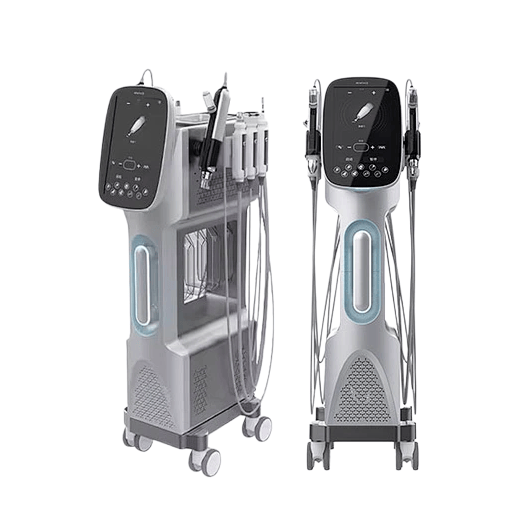
For practices in this scenario, selecting the right equipment is paramount. Partnering with an experienced beauty machinery manufacturer and equipment supplier helps ensure reliable technology, OEM/ODM options, and long-term support. Investing in a professional HydraFacial machine that offers Integrated Multi-Modal Therapy—combining cleansing, hydrating, anti-aging, and brightening protocols in one powerful system—is the smart choice for beauty salons and clinics aiming for comprehensive service delivery, streamlined operations, and strong business growth. The Jingyue Professional HydraFacial Machine is designed to meet these exact needs, offering the advanced technology required to deliver the premium HydraFacial experience with the reliability and control that practices demand, making the hydrafacial or microdermabrasion choice clear for growth-oriented businesses.
✅ Scenario 3: The Complementary Power of Offering Both
The most robust strategy for established practices is often a dual offering. This allows you to:
-
Cater to the Full Market Spectrum: Serve both value-conscious clients and those seeking premium experiences.
-
Create Phased Treatment Plans: Use microdermabrasion for an intensive "deep clean" every quarter and HydraFacial for monthly upkeep, dramatically increasing client visit frequency and lifetime value.
-
Strategic Upselling: Introduce a microdermabrasion client to the hydrating benefits of HydraFacial, or offer a HydraFacial client a more intensive microdermabrasion treatment for specific texture concerns. This approach leverages the strengths of both in the microdermabrasion facial vs hydrafacial landscape.
Conclusion
The microdermabrasion vs hydrafacial decision is a strategic business choice. Microdermabrasion remains a highly effective, efficient, and high-margin workhorse for targeted exfoliation. HydraFacial represents a premium, holistic, and experience-driven modality with exceptional client retention potential.
Ultimately, the question is not merely hydrafacial or microdermabrasion, but how each technology can be leveraged within your unique business context. By carefully assessing your market, client demographics, and long-term vision, you can make an informed investment that not only meets current demand but also positions your practice for sustainable growth and profitability in the competitive aesthetics industry. Whether you choose one or strategically offer both, understanding the difference between microdermabrasion and HydraFacial is key to your success.
Ready to Elevate Your Service Offering?
Equip your practice with the right technology to capture your target market and maximize growth. If the advanced, results-driven approach of HydraFacial aligns with your business vision, explore how the Jingyue Professional HydraFacial Machine can provide the reliable, high-performance platform you need. Contact us today to request a detailed specification sheet, pricing, or to schedule a professional consultation. Let's build the ideal treatment menu for your success.
FAQs: Microdermabrasion vs HydraFacial
Q1: In the debate of HydraFacial vs microdermabrasion, which treatment typically drives better client retention for repeat business?
A: HydraFacial is explicitly designed for frequent maintenance (e.g., monthly), fostering natural retention and facilitating subscription-style package sales. Microdermabrasion is often sold in fixed series (e.g., 3-6 treatments) with longer intervals between series, sometimes requiring more proactive rebooking strategies.
Q2: What are the main operational support considerations for each type of device in a microdermabrasion vs hydrafacial comparison?
A: Microdermabrasion: Support focuses on device durability, vacuum motor maintenance, and sourcing quality tips/parts. HydraFacial: Involves a more integrated ecosystem, including device software, a reliable supply chain for exclusive consumables (tips, serums), and certified technician training programs.
Q3: Can these treatments be safely combined in a treatment plan, or is it strictly a choice of microdermabrasion or hydrafacial?
A: Not in the same session due to over-exfoliation risk. However, they are highly complementary in a phased treatment plan. A common protocol is to perform a microdermabrasion treatment as a "reset," followed by HydraFacial treatments 2-4 weeks later for hydration and maintenance, or to alternate them on a seasonal basis.
Q4: From a marketing perspective, in the context of microdermabrasion facial vs hydrafacial, which treatment is easier to promote?
A: Microdermabrasion benefits from high name recognition; marketing focuses on tangible results like "smoother skin." HydraFacial, while requiring more initial client education, offers a powerful, multi-step narrative ("cleanse, extract, infuse") and delivers an immediate "glow" that is highly visual and shareable on social media, often generating stronger organic buzz.
What Is a Hydrodermabrasion Facial?
What is a Hydrafacial?
Related Article