How to Become a Tattoo Removal Technician
author: Jingyue Beauty
2026-04-11
Introduction
The tattoo removal industry is experiencing an unprecedented boom in demand. According to statistics, almost one-third of American adults have tattoos, and one in four of them has at least once had to deal with regret over the choice. (Data: Indeed, 2025; Fortune Business Insights, 2026) That is why many individuals are interested in how to become a tattoo removal technician to help people get rid of unwanted ink.
Regardless of whether you are a beauty specialist considering how to become a tattoo removal technician to diversify your portfolio, a beauty clinic owner looking to introduce this high-profit procedure into your clinic, or a device wholesaler interested in understanding your clients' needs, this guide is for you. We will answer the most commonly asked questions about the requirements for becoming a tattoo removal specialist, the skills required, and the cost of tattoo removal equipment. For anyone interested in how to become a laser tattoo removal specialist in particular, this guide will provide detailed information about this area of specialization.
For Beauty Clinics & Device Retailers: This article serves as both a career guide for aspiring technicians and a resource to help you understand the training and equipment landscape – whether you are hiring, training, or supplying the market.
What Does a Tattoo Removal Technician Do?
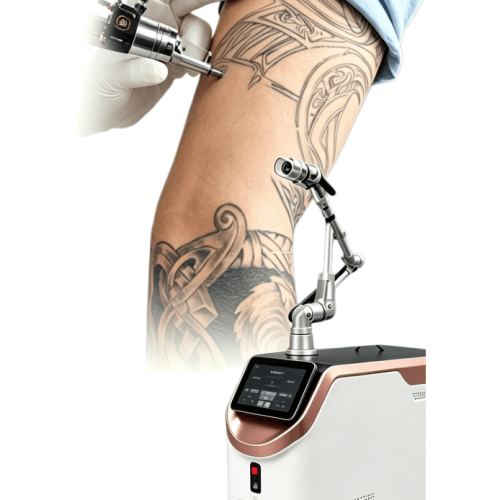
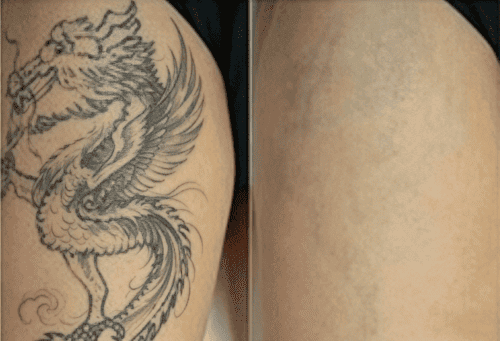
Before answering how do you become a tattoo removal technician, let us review what this job is all about. A tattoo removal technician is a person who performs laser tattoo removal to eliminate permanent ink pigments under the skin using special equipment.
The primary tool in tattoo removal is the laser. Specialized laser tattoo removal devices generate high-power light beams that penetrate the skin and disintegrate pigment particles. The most difficult to remove is black ink because it absorbs all wavelengths, which means that it is easier to treat than other colored inks.
Daily Responsibilities of a Laser Tattoo Removal Specialist
Here is what a typical tattoo removal technician is responsible for in a day:
- Conducting consultations with clients to assess the characteristics of the tattoo and skin type
- Explaining the process and its possible outcomes to the client and informing them about the number of sessions needed to achieve satisfactory results
- Performing safe laser treatment procedures using Q-switched or picosecond lasers
- Managing client records and storing treatment photos in accordance with privacy regulations
- Handling paperwork (booking, payment processing, appointment scheduling)
- Maintaining equipment and creating the conditions necessary for safe treatment
For those interested in learning how to become a laser tattoo removal specialist, the daily responsibilities of a laser tattoo removal technician are quite similar, except for advanced laser physics, treatment protocols for several colors, etc.
How to Become a Tattoo Removal Technician - Step by Step
To begin successfully learning how to become a tattoo removal technician, we recommend following these six steps. They are valid regardless of whether you are a novice or want to add this service to your beauty salon.
-
Step 1 – Research Local Regulations and Licensing Requirements
Before investing your time and money in equipment and training, research the regulations in your locality regarding tattoo removal technicians. It is crucial since the rules for who can work with lasers in this case vary by country, state, or even city.
For instance, in the USA, there are jurisdictions that require a person to be a medical specialist (e.g., a registered nurse or physician) to operate a laser machine. There are also regions where laser tattoo removal technicians are not required to have a medical degree but must be registered as an esthetician or cosmetologist and complete a certificate program after secondary education. Furthermore, they usually need several months of supervised experience and must pass theoretical and practical exams.
Actionable advice: You should contact your local health department or medical board to inquire about any additional requirements (such as the need for laser safety certification or operator permit). Also, check whether you need a special license for tattoo removal and other skin penetration procedures.
-
Step 2 – Complete Professional Laser Tattoo Removal Training
Education is the foundation of a successful tattoo removal business. Therefore, if you are seriously interested in how to become a tattoo removal technician, find and enroll in a high-quality training program that covers:
1) Basic skin anatomy and the Fitzpatrick Skin Scale;
2) Laser physics and laser safety principles;
3) Client consultation and assessment protocol;
4) Protocol for removing different colors of ink (black, red, green, blue, yellow);
5) Managing treatment complications and side effects (blistering, hypopigmentation, and scarring, etc.);
6) Hands-on practical training using Q-switched and picosecond lasers on live models.
Training programs can take various forms: fully online classes, purely hands-on classes in person, or hybrid programs that combine theory and practice. For example, the American Academy of Clinical Dermatology Specialists offers a professional certificate course with approximately 60 hours of online theory content and optional hands-on training. SAA Institute provides a 130-hour hybrid program over 12 weeks.
-
Step 3 – Obtain Official Certification
Having completed training, your next step is how to become a certified tattoo removal technician. A certificate issued by a reputable organization shows your competence and professionalism and can help you obtain additional insurance, which is mandatory.
The majority of reputable courses provide an official accredited certificate after graduation. For example, in the UK, you will receive the VTCT (ITEC) Level 5 Laser Tattoo Removal Qualification. If you complete an AACDS certificate, in Australia, you can get a license exemption from the radiological councils.
For those interested in how to become a laser tattoo removal specialist, it would be best if you pursued a Level 5 qualification since it implies advanced tattoo removal and allows you to work with multiple colors.
-
Step 4 – Get Practical Experience as an Apprentice
While certification shows your theoretical competence, practical experience is invaluable. That is why gaining experience in treating clients under the guidance of an expert practitioner is an integral part of how do you become a tattoo removal technician.
For instance, many aspiring specialists choose to become apprentices and undergo mentored training with an experienced technician. Others start working with clients in already existing clinics, spas, or dermatologists' offices under supervision. Still, some training organizations, such as Lynton Academy, offer a specialized course called "Tattoo Removal – Practical Focus" with intense practical training on live models.
-
Step 5 – Buy or Procure Professional-Quality Equipment
Your laser tattoo removal equipment is an integral element of a successful practice. If you are a beauty clinic owner, this step plays an important role, whereas, for aesthetic device wholesalers or retailers, knowing how to become a tattoo removal technician is vital to meet customer demand. Moreover, the equipment price and capabilities play a significant role in how to become a laser tattoo removal specialist.
There are two main types of professional laser tattoo removal devices used by most clinics: Q-switched Nd:YAG and picosecond lasers. Many clinics choose advanced Q-switched Nd:YAG tattoo removal machines for their reliability and versatility. Q-switched lasers have nanosecond pulses and can be used to remove almost any type of ink, while picosecond lasers can destroy pigment particles quickly and effectively due to ultra-short pulses, reducing the number of required sessions.
Here are some criteria you should take into account when purchasing a tattoo removal laser or advising your customers about it:
1) Number of wavelengths (dual-wavelength devices with a 532 nm and 1064 nm wavelength are preferable);
2) Power output (the higher the output, the faster the procedure takes place);
3) Cooling system (advanced cooling increases patient comfort and minimizes adverse effects);
4) Manufacturer warranty and training program (high-quality equipment lasts longer and is less prone to failure).
As a beauty clinic owner, offering tattoo removal services will require a considerable initial investment, but it will be extremely profitable in the long run. As an aesthetic device wholesaler or retailer, you should familiarize yourself with these technical characteristics to meet customer demand.
-
Step 6 – Open Your Clinic Legally
To open a tattoo removal clinic, you will have to fulfill several legal requirements. They depend on the state but generally include:
1) Creating a legal business entity (the most popular choice among owners is an LLC)
2) Acquiring necessary permits and licenses (depending on your state, you may need to get licenses for providing cosmetic and laser treatment services)
3) Obtaining liability insurance (professional liability, general liability, and equipment insurance)
4) Providing appropriate facilities for your clinic (sterilization equipment, proper lighting, ventilation, etc.)
Essential Skills for a Successful Laser Tattoo Removal Specialist
Besides professional skills, many soft and hard skills contribute to success as a tattoo removal technician. Let us discuss the most important ones.
| Skill Category | Specific Competencies |
| Technical Skills | Mastery of operation of laser devices, wavelength selection, energy adjustment |
| Safety Knowledge | Knowledge of laser safety principles, infection control, HIPAA compliance |
| Physical Stamina | Ability to stand for long periods and perform precise actions |
| Emotional Intelligence | Empathy for clients experiencing tattoo regret |
| Communication | Excellent communication skills to explain the procedure and realistic client expectations |
| Organizational Skills | Bookings and appointment scheduling, record keeping |
How to Become a Laser Tattoo Removal Specialist - Advanced Steps
For those interested in learning how to become a laser tattoo removal specialist, there are several paths you should consider.
It is impossible to work with multi-color ink or remove tattoos with complex designs without additional education. Thus, if you are eager to move forward in this area of specialization, you will have to obtain a Level 5 qualification, such as the VTCT (ITEC) Level 5 Laser Tattoo Removal Specialist Award.
The following are the entry requirements for most advanced training programs:
- VTCT (ITEC) Level 4 laser and IPL qualification;
- Age of at least 18 years;
- Some programs require a Level 3 beauty therapy qualification or equivalent.
Advanced specialists learn how to approach all kinds of difficult tattoos, from dense black saturation to challenging greens and reds while ensuring predictable fading. Such specialists can command high rates and offer tattoo removal services at dermatology clinics and medical spas.
Equipment for Laser Tattoo Removal - Considerations for Beauty Clinics & Device Suppliers
This section is especially relevant for beauty clinic owners and aesthetic device wholesalers or retailers who either want to introduce this treatment into their portfolio or supply equipment to the market.
-
Q-Switched Lasers vs. Picosecond Laser Devices
To decide what type of equipment to buy or advise your clients, you must understand the difference between these two types.
1) Q-Switched Nd:YAG lasers – These are the most affordable and widely used devices. They are suitable for dark inks and are used in most regular beauty clinics. Price range: $5,000 to $30,000, depending on the pulse energy and power; More about this machine -- What is Q Switch Laser Treatment
2) Picosecond lasers – These lasers have ultra-short pulses, which leads to faster and more effective destruction of pigment particles. They provide superior results with fewer sessions. However, they cost much more. Price range: $20,000 to $45,000 for professional-grade devices. High-end models can cost $90,000+.
-
Cost Breakdown for Laser Tattoo Removal Equipment
If you plan to open a clinic specializing in tattoo removal in the future, here is how much equipment for tattoo removal costs.
| Equipment Type | Price Range (USD) | Best For |
| Entry-Level Q-Switch Nd:YAG | $1,500 – $5,000 | Starter clinics on a budget |
| Professional Q-Switch Nd:YAG | $5,000 – $12,000 | Standard beauty clinics |
| Dual-Wavelength Q-Switch (532/1064 nm) | $8,000 – $15,000 | Multi-color tattoo removal |
| Picosecond Laser | $20,000 – $45,000 | Advanced medical/premium clinics |
| Multi-Function Laser System | $10,000 – $30,000 | Comprehensive medical spas |
Additional costs to budget for include:
-
Maintenance – $300 to $2,000 annually
-
Consumables – Cooling gel, protective eyewear, filters
-
Training – $500 to $3,000 (sometimes included with purchase)
-
Insurance – Professional liability coverage
The global picosecond laser tattoo removal equipment market is expanding, as clinics are constantly updating their devices from Q-switched to picosecond technology.
Market Overview for Tattoo Removal Services
If you are wondering how to become a tattoo removal technician for the purpose of running your own clinic, here are the market prospects for this field.
The global tattoo removal market is estimated to reach USD 1.29 billion by 2025. From 2026, its size will grow from USD 1.49 billion to USD 4.87 billion by 2034, marking a CAGR of 15.98%.
North America has the highest market share, accounting for 35.91%, and the U.S. market is forecast to reach USD 1.06 billion by 2032. The procedures with the highest share are laser treatments, which constitute about 67.34% of the market share. Laser tattoo removal has become so popular among consumers due to the non-invasive and pain-free nature of the procedure. (Data: Fortune Business Insights, 2026)
-
Earnings for a Tattoo Removal Specialist
As mentioned above, tattoo removal specialists earn relatively well. In the UK, technicians with a minimum of Level 5 qualification have an annual income of £20,000 to £26,000 and can increase it to £28,000 to £40,000 or more with additional experience. Independent specialists can earn from £45,000 to £70,000 or even more per year. Experienced U.S. technicians earn an average of $51 per hour. The highest-paid specialists can earn up to $190 or more per hour.
-
Job Stability
The demand for tattoo removal services will remain stable for the foreseeable future since people's lifestyles keep changing, and tattoos might no longer suit them. This industry is mature and rapidly developing.
Conclusion
If you are wondering how do you become a tattoo removal technician, you are at the beginning of a promising and lucrative career path. The global market for laser tattoo removal is growing fast, and there is a great demand for professionals in this field.
As a beginner or beauty clinic owner, this guide will tell you how to become a laser tattoo removal technician step by step. First, you should research local regulations and licensing requirements, then complete a training program and obtain a professional qualification. After gaining experience, you will have to purchase equipment, open your clinic legally, and ensure its operation according to the standards.
If you are interested in how to become a laser tattoo removal specialist, you will have to pursue additional training and a Leveled qualification.
Does Laser Hair Removal Affect Tattoos?
Can Tattoo Removal Lasers Also Treat Pigmentation Issues? Full Guide for Clinics
Related Article
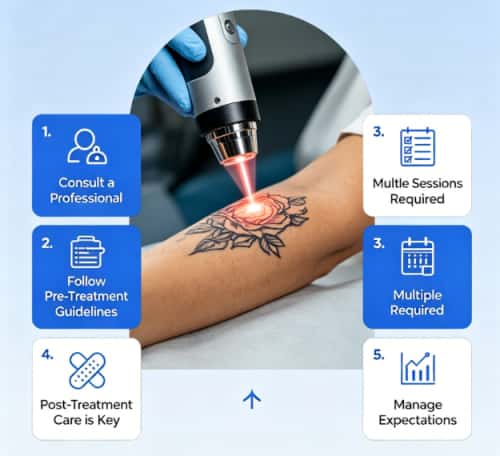
The following article offers comprehensive guidance regarding laser tattoo removal procedures, answering above questions with useful tips.
A Complete Guide of Top Tips for Effective Tattoo Removal with Laser
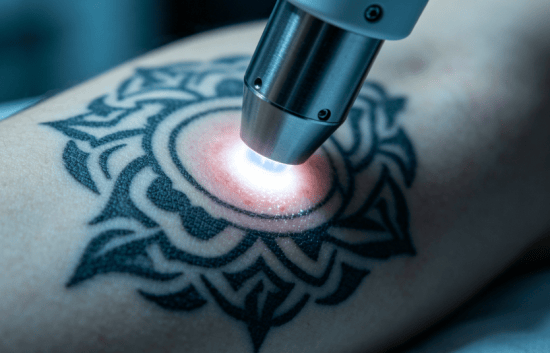
Full breakdown of picosecond aesthetic laser tattoo removal cost—per session pricing, size-based fees, color complexity, and what B2B buyers need to know.
How Much Does Picosecond Aesthetic Laser Tattoo Removal Cost?