How Long Does Tattoo Removal Take? A Complete Timeline for Clinics & Clients
For medical aesthetics clinics, it is vital to understand laser tattoo removal. This helps with treatment and sets clear client expectations.
One of the most common questions potential clients ask is, “how long does tattoo removal take?”. The answer is rarely a simple number. Whether you are a clinic owner, a wholesale distributor of aesthetic equipment, or a practitioner, having a comprehensive grasp of the treatment timeline is key to client satisfaction and business success.
This article explores tattoo removal timing, from one laser session length to total months or years for full clearance. By understanding these factors, you can teach your clients well and make your practice or product a trusted authority.

Understanding the Laser Tattoo Removal Timeline: A Two-Part Answer
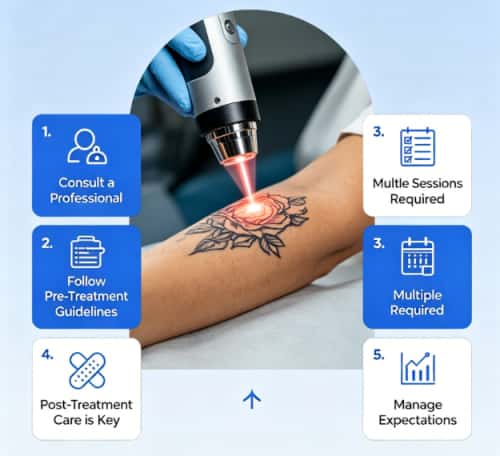
To answer the question, “how long does laser tattoo removal take?”, we must break the timeline into two distinct components:
1. The treatment session length: The actual time a client spends under the laser.
2. The total clearance timeline: The overall period from the first session to complete fading, which spans months or years.
This distinction is crucial. While one session may take only minutes, full removal needs patience and help from the body’s healing system.
How Long Does a Single Laser Tattoo Removal Treatment Take?
One of the key selling points for modern laser systems is their speed and efficiency. Unlike surgical removal, laser sessions are relatively quick and require no downtime in the traditional sense.
Small Tattoos (10–15 Minutes)
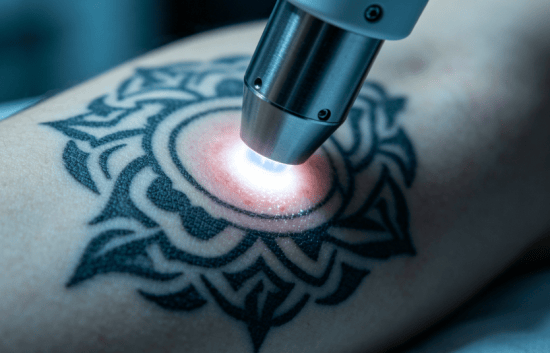
For small tattoos, like a symbol, script, or fine-line design, the laser session can take 10 to 15 minutes. This is often the case for tattoos smaller than 2x2 inches. The speed allows clinics to schedule multiple clients per hour, making it a profitable service.
Medium to Large Tattoos (30–60 Minutes)
Larger tattoos, such as half-sleeves, back pieces, or intricate multi-colored designs, require significantly more time. For these, the laser treatment session can take anywhere from 30 minutes to a full hour. The time needed depends on the treated area size and the ink color complexity. Different wavelengths may be used on different tattoo sections.
For clinics, managing appointment lengths efficiently while ensuring thorough coverage is key. Advanced devices with larger spot sizes and high repetition rates can cut treatment time, supporting a stronger return on investment when you understand laser tattoo removal machine costs and ownership. This improves client comfort and clinic workflow.
The Total Timeline: How Many Years Does Tattoo Removal Take?
When potential clients ask, “how many years does tattoo removal take?”, they are inquiring about the total clearance time. While a single session is brief, complete removal is a process. The answer varies widely, but on average:
· Minimum: 6 months to 1 year (for small, black, amateur tattoos)
· Average: 1 to 2 years (for most professional tattoos)
· Extended: 3+ years (for large, multi-colored, or stubborn tattoos)
Most clients require a series of 6 to 12 sessions spaced 6 to 8 weeks apart. This spacing is non-negotiable—it allows the body’s immune system to process and eliminate the shattered ink particles. Trying to accelerate the process by reducing the time between sessions is counterproductive and can increase the risk of scarring or pigmentation issues.
Key Factors That Influence the Tattoo Removal Timeline
As a professional in the aesthetics industry, you know that no two tattoos are the same. Several biological and technical factors directly impact how long it takes to fully laser remove a tattoo.
1. Ink Color and Type
This is one of the most significant factors. Black and dark blue inks are the easiest to treat because they absorb all wavelengths of laser light. Consequently, they typically require fewer laser tattoo removal sessions.
Conversely, colors like yellow, green, red, and orange are more challenging. These pigments reflect certain wavelengths, requiring specific lasers (such as the PicoWay) that can target a broader spectrum. Treating these colors adds to the total number of sessions and extends the overall timeline, making the choice of the best laser technology for tattoo removal a critical decision for clinics.
2. Tattoo Age and Quality
Ironically, older tattoos are often easier to remove than newer ones. Over time, the body naturally attempts to break down the ink, albeit unsuccessfully. This means that for a tattoo that is several years old, the immune system has already begun the process, making the laser’s job easier.
The quality of the original tattoo also matters. Amateur tattoos, which often use less dense, lower-quality ink, can fade more quickly. In contrast, professional tattoos with high-quality, densely packed ink will require more laser tattoo removal sessions to achieve full clearance.
3. Tattoo Location on the Body
Placement plays a crucial role in the tattoo removal timeline. Tattoos located close to the heart, such as on the chest or upper back, tend to fade faster. This is because these areas have richer blood circulation, allowing the immune system to transport broken-down ink particles away more efficiently.
Tattoos on extremities—hands, feet, fingers, and ankles—often take longer to remove. The skin here is thinner and circulation is poorer. Additionally, areas with thin skin require more cautious laser settings to avoid damage, potentially leading to a longer course of treatment.
4. Skin Tone
The client’s natural skin tone is a critical consideration for safety and efficacy. Individuals with darker skin have higher concentrations of melanin, which competes with the tattoo ink for laser energy absorption. Using a laser that is not optimized for melanin can lead to hypopigmentation (lightening of the skin) or burns.
Advanced lasers like the PicoWay are safer for darker skin tones because their ultra-short pulses minimize heat damage to the surrounding tissue. However, the process may still be slower, requiring more laser tattoo removal sessions to achieve the desired results without compromising skin integrity.
5. The Client’s Immune System and Lifestyle
Ultimately, the laser only breaks the ink into smaller particles; the body’s immune system does the actual removal. A strong, healthy immune system isa vital for swift tattoo removal timeline, whether you are performing tattoo removal or broader Q-switch laser treatment for pigmentation concerns.
Lifestyle factors play a huge role:
· Smoking: Nicotine constricts blood vessels and impairs immune function, significantly slowing down ink clearance.
· Hydration and Nutrition: A well-hydrated body with a nutrient-rich diet supports lymphatic function, speeding up the process.
· Exercise: Regular physical activity boosts circulation and helps the body flush out the shattered ink.
Clinics should counsel clients on these factors to help them achieve the best possible results.
How Long Does It Take to Fully Laser Remove a Tattoo with Advanced Technology?
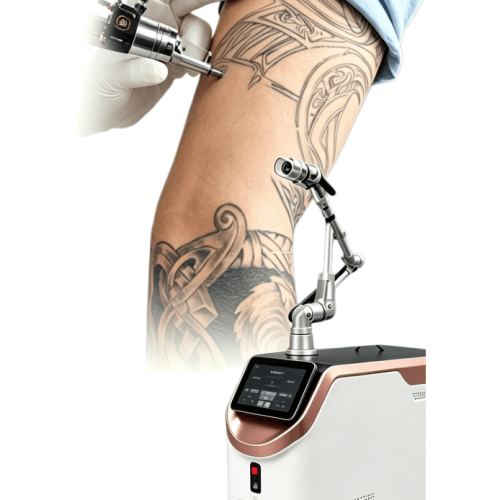
The introduction of picosecond lasers, such as the PicoWay system, has revolutionized the industry. Compared to older nanosecond Q-switched lasers, picosecond technology delivers energy in ultra-short pulses that shatter ink into much finer dust-like particles. This allows the body to clear the ink faster and with less thermal damage to surrounding skin, and it’s important for practitioners to understand the clinical differences outlined in our guide to Pico laser vs Q-switched laser applications.
For clinics and wholesale distributors, this technology is a game-changer. At Jingyue Beauty, we offer advanced picosecond laser systems that deliver the same cutting-edge performance—helping practitioners achieve superior results with fewer treatments. A tattoo that might have taken 10–12 sessions with a nanosecond laser can often be cleared in 6–8 sessions with a picosecond laser. While the single-session duration may be similar, the total laser tattoo removal timeline is shortened by several months.
How to Speed Up Tattoo Removal: Best Practices for Clinics and Clients
As a service provider, you can guide clients on how to optimize their results. Here are the most effective strategies to ensure the removal process stays on schedule:
1. Adhere to Treatment Spacing: The most common mistake is coming in too soon. Encourage clients to wait the full 6–8 weeks. This gives the macrophages (the immune cells) time to clear the ink.
2. Protect from the Sun: Sun exposure in the treatment area is a major setback. A sunburn can cause complications and force a delay of several weeks or months until the skin recovers.
3. Boost Immunity: Encourage clients to quit smoking, reduce alcohol intake, drink plenty of water, and engage in light exercise. These lifestyle adjustments can dramatically influence how long it takes to fully laser remove a tattoo.
4. Proper Aftercare: Following post-treatment care—keeping the area clean, avoiding picking at scabs, and using recommended ointments—prevents scarring. Scar tissue over the tattoo can make it more difficult for the laser to penetrate effectively.
Conclusion: Managing Expectations for a Successful Outcome
For aesthetics professionals, the ability to clearly answer “how long does tattoo removal take” is essential to building trust and setting realistic expectations. Successful treatment is a collaborative process—one that combines the clinic’s technical expertise with the client’s commitment to proper aftercare and lifestyle habits.
The timeline varies widely, from a 10-minute session for a small tattoo to a multi-year journey for large, complex designs. By leveraging advanced picosecond technology—such as the systems offered at Jingyue Beauty —clinics can deliver superior results, often reducing the total number of sessions required, especially when combined with data-driven tools like professional skin analysis machines for treatment planning. For wholesalers and retailers, promoting such high-performance equipment underscores their commitment to efficiency, safety, and predictable outcomes.
Ultimately, transparency is the foundation of success. When practitioners take the time to educate clients on the key factors affecting their timeline—ink color, tattoo location, and overall health—they foster patience and trust. Clients who understand that tattoo removal is a gradual process are more likely to stay engaged, follow recommendations, and achieve satisfying results. In turn, this strengthens the clinic’s reputation and builds long-term client loyalty.
FAQs on Tattoo Removal Duration
1: Does laser tattoo removal hurt?
The sensation is often described as a rubber band snapping against the skin. Modern devices often incorporate cooling mechanisms to improve comfort. Treatment duration directly correlates with pain exposure, so shorter sessions are generally easier for clients.
2: Can I remove a tattoo in one session?
No. This is a common misconception.
Tattoos are designed to be permanent. A single session can only break up a portion of the ink. The body needs time to clear that ink before the next layer can be treated. For more details: you can go to: How Many Sessions To Remove Tattoo?
3: How long after a session do I see results?
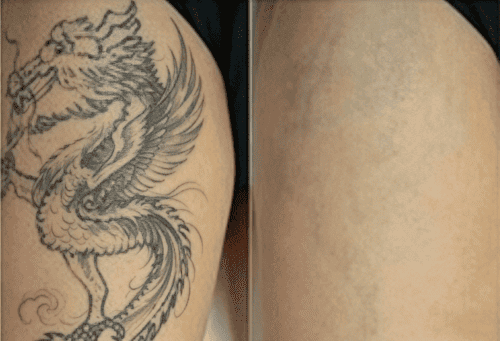
Fading is not immediate. Clients will notice the tattoo becoming lighter over the 4–8 weeks following a session as the immune system works. The tattoo removal fading process is gradual and requires patience.
4: What is the cost implication of a longer timeline?
Most clinics charge per session or offer packages. A longer timeline due to complex factors (like color or location) means more sessions and a higher total cost, which we explore in depth in our guide to laser tattoo removal cost factors. It’s important to discuss this during the consultation to manage financial expectations.
How to Start a Tattoo Removal Business?
Laser Tattoo Removal Side Effects: What Clinics Must Tell Clients
Related Article